How does wireless charging work, and is it worth using? Your charger and phone each hold a coil, and a magnetic field carries power between them. It’s convenient, but alignment and distance decide how well it performs.
This explainer is part of our wider coverage of mobile phones and gadgets.
| Item | Value |
|---|---|
| Reach of a Qi charger | Up to 4 cm |
| Distance for best energy transfer | 5-10 mm |
| System efficiency at that distance | 70-80 % |
| Operating frequency range | 110-360 kHz |
| Top speed in Qi 2.2 (April 2025) | Up to 25 W |
Figures come from Wikipedia’s Qi page and the ib-lenhardt Qi knowledge base. Standards get revised, so check the source before you rely on them.
The basic idea: coils and a magnetic field
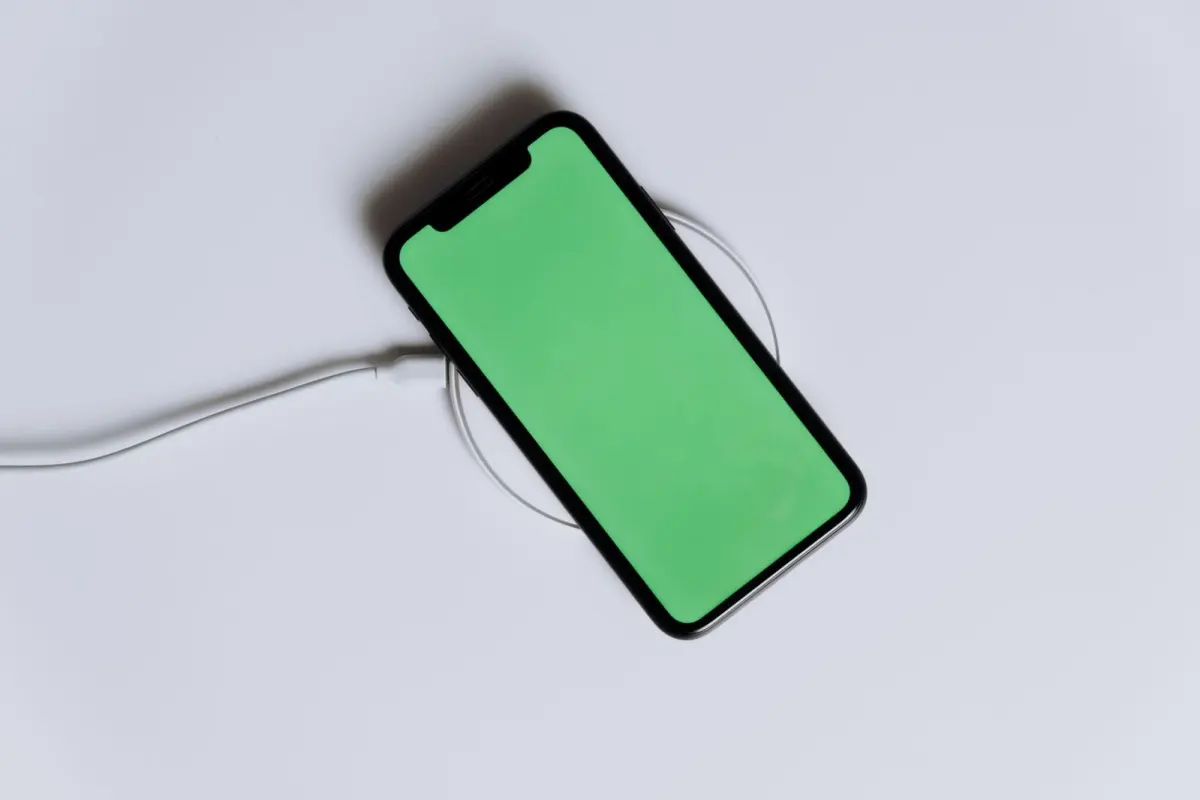
Wireless charging runs on electromagnetic induction. In the Qi system, the charger (the base station) holds a transmitting coil that generates an oscillating magnetic field, and your phone holds a receiving coil, as Wikipedia’s Qi page describes.
That field induces an alternating current in the receiving coil by Faraday’s law of induction. The phone’s power receiver then regulates the transferred power to a level that suits the device.
Distance matters a great deal. Wikipedia’s Qi page says a Qi charger can be effective over distances up to 4 cm, and that close spacing of the coils keeps the transfer efficient. Optimal transfer happens at 5-10 mm, with 70-80 % system efficiency, according to ib-lenhardt.
What happens when you set your phone down
Your phone and charger negotiate before real power flows. Granite River Labs’ summary of Qi2 compliance describes the sequence:
- Configuration: the phone’s receiver sends a configuration packet to the charger’s transmitter.
- Negotiation: the two exchange parameters that the charger later uses to estimate power loss.
- Power transfer: once the transmitter acknowledges, the receiver ramps up power in increments of 1 W or less.
Throughout, the charger’s control unit regulates power to the level the phone requests, per Wikipedia. Some Qi transmitters start their connection at 140 kHz but can shift frequency to better match the distance between coils, while the standard as a whole operates in the 110-360 kHz range, according to ib-lenhardt.
Chargers also differ in how forgiving they are. With guided positioning, you must place the device on a certain spot of the surface. Free positioning does not require direct alignment with the transmitting coil, according to Wikipedia.
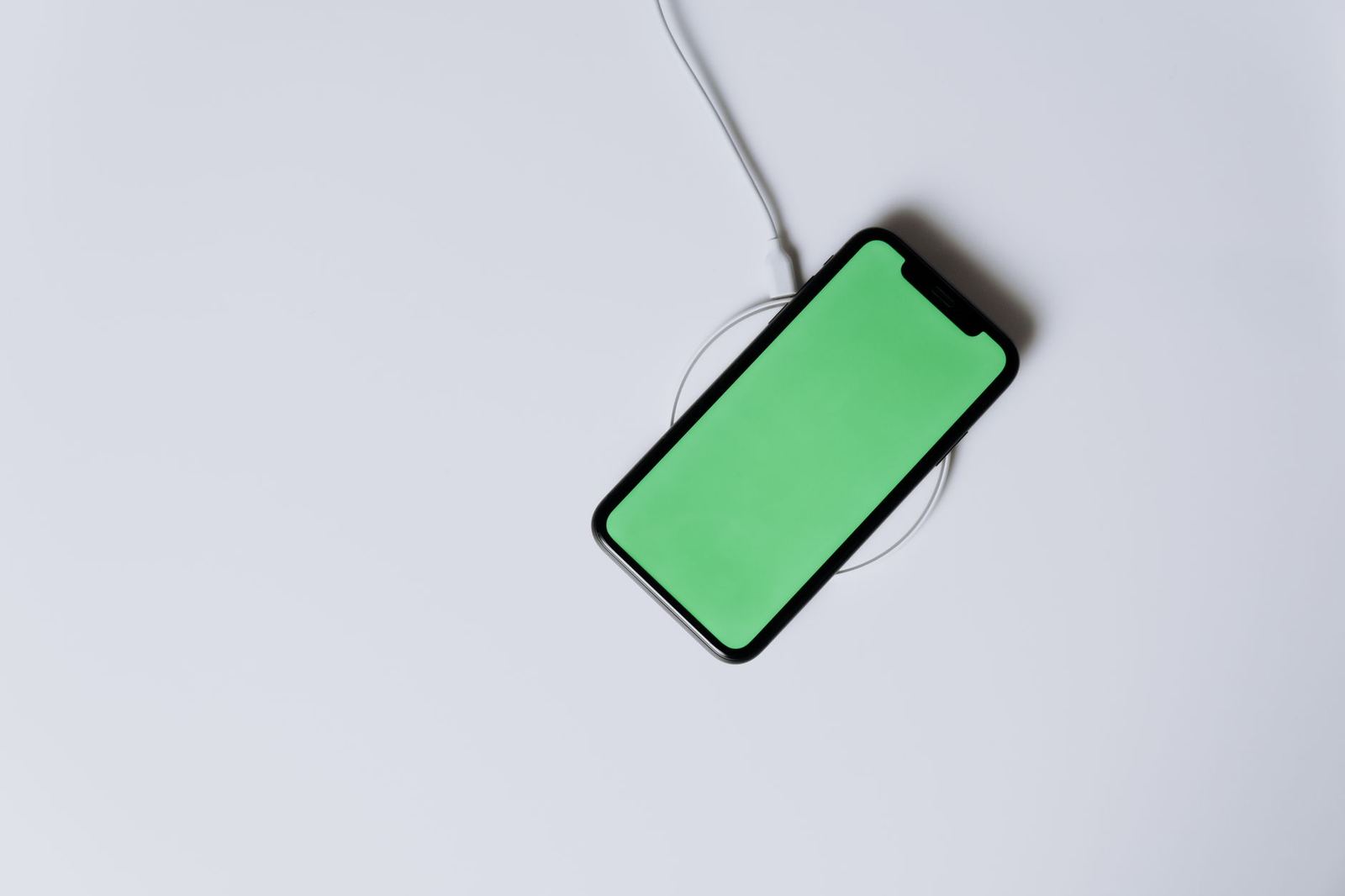
What is Qi, and how fast can it charge?
Qi is an open standard for inductive charging developed by the Wireless Power Consortium. Version 1.0 was released in 2010, and by 2017 it had been built into more than 200 models of phones, tablets and other devices, according to Wikipedia. In December 2023, 351 manufacturers were working with the standard, including Apple, Samsung and Google.
Speed depends on the power profile that both your charger and your phone support:
- Baseline Power Profile: up to 5 W, used for wearables, earbuds and trackers (Promwad).
- Extended Power Profile: up to 15 W for more power-hungry devices (Promwad).
- Magnetic Power Profile in Qi2: 15 W, through optimal device alignment (Granite River Labs).
- Qi 2.2, released in April 2025: up to 25 W (Wikipedia).
Brand rules can cap speeds too. As of Macworld’s January 2023 report, Apple limited wireless charging to 7.5 W unless an official MagSafe product was used, even though Qi supported up to 15 W. Check your phone maker’s own specifications for today’s limits.
Qi2 and magnets: fixing the alignment problem
Misalignment wastes energy. The Wireless Power Consortium announced Qi2 with a Magnetic Power Profile built on Apple’s MagSafe technology, as Macworld reported in January 2023. The magnetic attachment helps align the charging coils for better efficiency and less power loss, which allows for higher charging rates.
The consortium’s executive director, Paul Struhsaker, argued that Qi2’s alignment improves energy efficiency by reducing the loss that happens when phone and charger are not aligned, per Hackster.io. That is a claim from the standard’s maintainers, so treat it as the design goal rather than a guarantee.
Qi 2.0 was officially released in 2023, and every design bearing the Qi2 logo must support both the magnetic and baseline profiles for backwards compatibility, says Granite River Labs. In practice, a receiver without magnetic support still charges on a Qi2 charger, but slowly. One 15 W Qi2 reference design from Infineon lets such receivers charge at 5 W, according to EE Journal.
For the faster tier, Wikipedia’s Qi page lists version 2.2.1, released in July 2025, as including Qi2 25 W branding for the 25-watt charging mode.
Why wireless charging loses energy and runs warm
An efficiency of 70-80 % means some of the energy leaks away on the way to your battery, as ib-lenhardt puts it. That loss is why heat is a design concern: Promwad says thermal behavior during charging determines whether the device heats to a level that affects battery lifetime, skin contact comfort, or regulatory compliance.
Metal is the other hazard. Granite River Labs notes that coins, credit cards or keys between an active charger and phone may cause overheating and pose a safety risk.
Qi2 answers this with foreign object detection. When the transmitter detects an object, it renegotiates to a lower power level to minimize heat buildup. This process, known as “best effort charging”, still allows continuous battery charging, per the same source.
How to get the best results from a wireless charger
- Match the labels: a Qi2 charger only delivers magnetic-profile speeds to a phone that supports it.
- Follow the positioning: on a guided-positioning pad, set the phone on the marked spot.
- Keep metal out: clear coins, keys and cards from between the phone and the pad.
- Mind the gap: anything that adds distance between the coils works against efficiency, since best transfer happens at 5-10 mm (ib-lenhardt).
If wireless charging is a feature you want, see our guide on how to choose a smartphone to weigh it against everything else. Charging habits are one part of phone care, and learning how to back up your phone protects your data whichever way you charge.
Frequently asked questions
Does my phone have to touch the charger?
Show answer
Not strictly. A Qi charger can be effective over distances up to 4 cm, according to Wikipedia, but the best transfer is at 5-10 mm, says ib-lenhardt.
Is Qi2 the same as Qi?
Show answer
Qi2 builds on Qi and adds the Magnetic Power Profile. Designs bearing the Qi2 logo must also support the baseline profile for backwards compatibility, per Granite River Labs.
Why does my wireless charger sometimes slow down?
Show answer
One cause is a foreign object, such as a coin or key, between phone and charger. The transmitter then renegotiates to a lower power level to limit heat, according to Granite River Labs. Poor alignment also wastes energy.
Will any Qi charger work with any Qi phone?
Show answer
Qi is an open standard, and 351 manufacturers were working with it in December 2023, according to Wikipedia. Charging speed still depends on the power profiles that both the phone and the charger support.